names that mean deceiver

280+ Names That Mean Deceiver Cunning, Trickster & Mysterious 2026

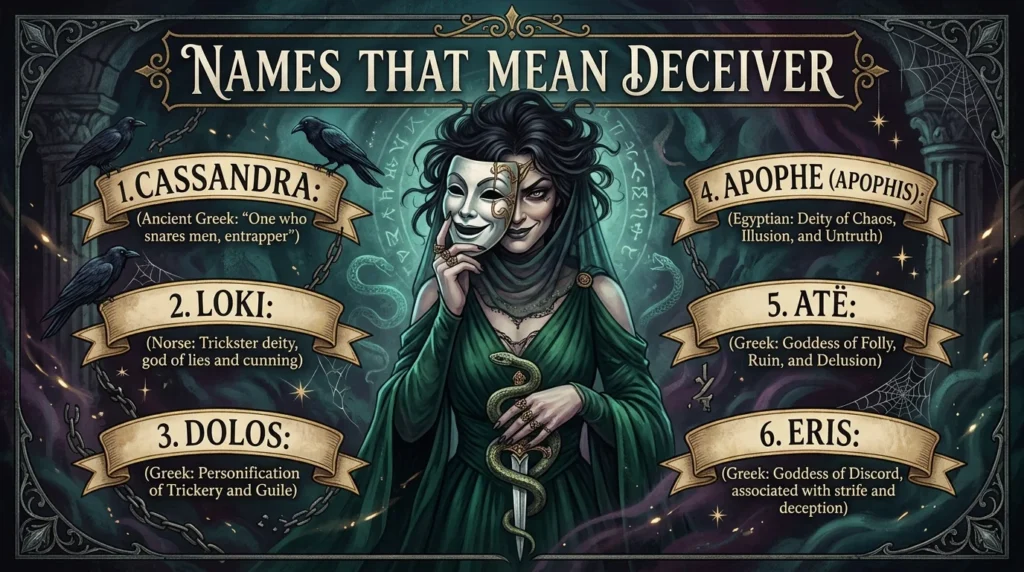
Names that mean deceiver often represent cunning, cleverness, illusion, strategy, and mystery rather than simple dishonesty. There are very few traditional given names that literally mean “deceiver.” Instead, many names are linked to tricksters, shapeshifters, illusionists, cunning figures, and mythological characters known for deception or clever schemes.

Whether you’re naming a fictional villain, antihero, fantasy character, or exploring names with darker symbolism, this guide highlights names associated with deception, trickery, and hidden identities.

Boy Names Associated with Deception or Tricksters

Boy Names Associated with Deception or Tricksters

NameMeaningOrigin
DolosDeception, trickeryGreek
LokiNorse trickster godNorse
HermesMessenger and clever tricksterGreek
MāuiLegendary trickster heroPolynesian
AnansiClever spider tricksterAkan (West African)
CoyoteTrickster figureNative American traditions
PrometheusClever strategistGreek
OdysseusKnown for cunning and strategyGreek
SinonLegendary deceiver in the Trojan WarGreek legend
PuckMischievous spiritEnglish folklore
RavenTrickster figure in many Indigenous traditionsVarious
VelesTrickster deitySlavic
MercuryRoman counterpart of HermesRoman
NarfiConnected to Norse mythsNorse
FenrirMythological wolfNorse
PanMischievous woodland godGreek
SetGod associated with chaosEgyptian
MorpheusGod of dreams and illusionGreek
ProteusShape-shifting sea godGreek
JanusTwo-faced god of transitionsRoman

Girl Names Inspired by Trickery and Illusion

NameMeaningOrigin
CirceEnchantress and illusionistGreek
MedeaSorceress known for cunningGreek
MorganaMagical enchantressWelsh
LilithMythological night figureHebrew
ErisGoddess of discordGreek
NyxGoddess of nightGreek
HecateGoddess of magicGreek
MorriganShape-shifting goddessIrish
KitsuneFox spirit known for illusionJapanese folklore
DelilahAssociated with betrayal in the BibleHebrew
BelladonnaBeautiful lady; poisonous plantItalian
LamiaMythical enchantressGreek
PandoraBearer of unforeseen consequencesGreek
SeleneMoon goddessGreek
RavenIntelligent black birdEnglish
NoirBlackFrench
UmbraShadowLatin
VesperEvening starLatin
AislingDream, visionIrish
CalypsoShe who concealsGreek

Gender-Neutral Names with Trickster Themes

  • Alias
  • Cipher
  • Echo
  • Enigma
  • Illusion
  • Kage
  • Mirage
  • Mystery
  • Noir
  • Obsidian
  • Oracle
  • Phantom
  • Raven
  • Riddle
  • Shade
  • Shadow
  • Specter
  • Trick
  • Umbra
  • Whisper

Names Connected to Tricksters in Mythology

  • Anansi
  • Coyote
  • Dolos
  • Hermes
  • Janus
  • Kitsune
  • Loki
  • Māui
  • Mercury
  • Morrigan
  • Odysseus
  • Pan
  • Proteus
  • Puck
  • Raven
  • Set
  • Sinon
  • Veles
  • Calypso
  • Circe

Japanese Names and Folklore Linked to Illusion

Japanese Names and Folklore Linked to Illusion

NameMeaningOrigin
KitsuneFox spiritJapanese
KageShadowJapanese
YamiDarknessJapanese
ReiSpirit (depending on kanji)Japanese
AkiraBrightJapanese
HarukaDistantJapanese
ItsukiTreeJapanese
KaedeMapleJapanese
MakotoSincerityJapanese
NaoHonestJapanese
NozomiHopeJapanese
RenLotusJapanese
RinDignifiedJapanese
ShinTruthJapanese
SoraSkyJapanese
TsubasaWingsJapanese
YukiSnow or happinessJapanese
AoiHollyhockJapanese
HikariLightJapanese
KokoroHeartJapanese

Names That Symbolize Mystery and Cunning

  • Cipher
  • Eclipse
  • Echo
  • Enigma
  • Fox
  • Labyrinth
  • Mirage
  • Mystery
  • Night
  • Noir
  • Obsidian
  • Oracle
  • Phantom
  • Puzzle
  • Riddle
  • Shadow
  • Smoke
  • Twilight
  • Whisper
  • Wraith

How We Choose Names That Mean Deceiver

Because traditional names that literally mean “deceiver” are extremely rare, this guide includes names associated with:

  • Mythological tricksters.
  • Masters of disguise.
  • Illusion and magic.
  • Cunning intelligence.
  • Shape-shifting and hidden identities.
  • Strategic thinking and cleverness.

Tips for Choosing a Deceiver-Inspired Name

  • Consider whether you want a subtle or obvious reference.
  • Research the mythology behind the name.
  • Match the name to your character’s personality.
  • Keep pronunciation simple and memorable.
  • Avoid assuming folklore equals literal meaning.
  • Verify meanings through reliable sources.

Common Mistakes to Avoid

  • Claiming a name literally means “deceiver” without evidence.
  • Confusing trickster figures with villains.
  • Ignoring the cultural background of mythological names.
  • Using modern internet meanings without verification.
  • Overlooking pronunciation and spelling.
  • Choosing symbolism that doesn’t fit your intended character.

FAQs

Are there names that literally mean deceiver?

Very few traditional personal names literally mean “deceiver.” One of the closest examples is Dolos, the Greek personification of trickery and deceit. Most names in this category are associated with legendary tricksters rather than carrying the literal meaning.

What mythological names are linked to deception?

Popular examples include Loki, Hermes, Anansi, Māui, Coyote, Proteus, Circe, Medea, and Kitsune. These figures are known for cleverness, illusion, disguise, or strategic deception.

Is Loki a name that means deceiver?

Not literally. Loki does not linguistically translate to “deceiver,” but in Norse mythology he is famous as a trickster who uses wit, shape-shifting, and deception, making him one of the strongest symbolic choices.

Are there Japanese names related to deception?

There are no common Japanese given names that literally mean “deceiver.” However, Kitsune (fox spirit) is strongly associated with illusion and transformation in Japanese folklore, while Kage means “shadow,” offering a symbolic connection.

What does a deceiver-inspired name symbolize?

These names often symbolize intelligence, adaptability, strategy, illusion, mystery, creativity, and transformation. In many myths, trickster figures are not purely evil—they challenge rules, solve problems creatively, and reshape the world.

Can these names be used for fictional characters?

Yes. Names associated with tricksters and deception are especially popular for fantasy characters, antiheroes, spies, rogues, illusionists, and morally complex villains because they evoke intrigue and cleverness without relying on clichés.

Conclusion

Names inspired by deceivers blend mythology, intelligence, and mystery. While almost no traditional names literally mean deceiver,” choices like Dolos, Loki, Anansi, Hermes, Circe, Proteus, and Kitsune are deeply connected to trickery, illusion, and strategic thinking.

Whether you’re naming a fictional character or exploring names with darker symbolism, these options offer rich cultural histories and memorable meanings that go far beyond simple deception.

Scroll to Top