
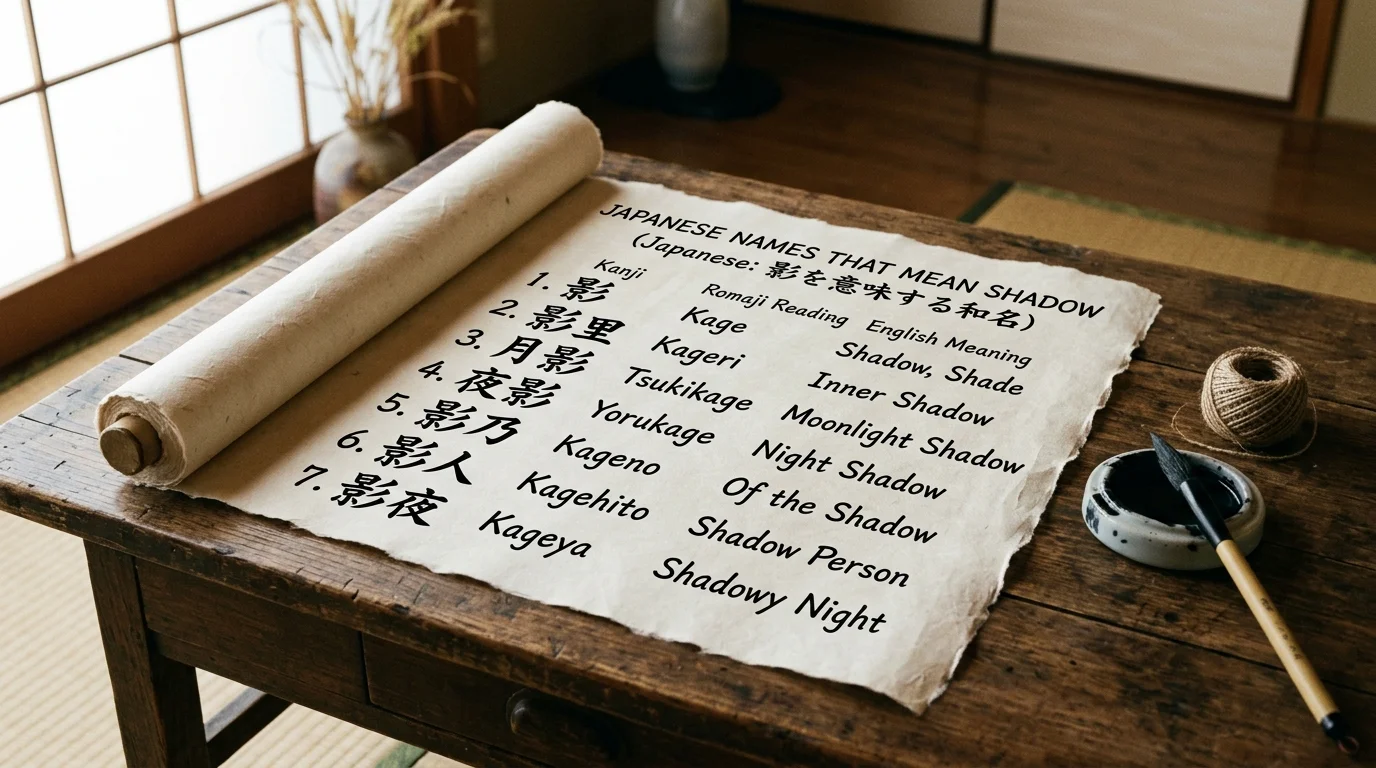
Japanese Names That Mean Shadow or Are Associated With Shadow
Note: The following names either use kanji related to shadow (影 / kage) or have authentic associations with darkness, shade, evening, moonlight, or mystery. Few are common given names with the exact meaning “shadow.”
- Kage (影) — shadow
- Kageo (影男) — shadow man
- Kageki (影輝) — shining shadow
- Kagetora (景虎 / 影虎) — shadow tiger (possible kanji variation)
- Kagenori (影則) — law of shadows (possible kanji)
- Kagehisa (影久) — enduring shadow
- Kagemitsu (影光) — shadow and light
- Kageyuki (影幸) — fortunate shadow
- Kageshi (影志) — shadow aspiration
- Kagerō (陽炎 / 蜉蝣) — heat haze; shimmering shadow-like mirage
These names use or can be written with kanji associated with shadows or shadow imagery.
Japanese Boy Names Associated With Shadow
- Akira (bright; balances darkness)
- Haruto
- Hayate
- Kage
- Kageaki
- Kagehisa
- Kageki
- Kagemitsu
- Kagenori
- Kageshi
- Kagetora
- Kageyuki
- Rei
- Ren
- Shion
- Subaru
- Takumi
- Yoru (night)
- Yoruo
- Yūto
These names evoke mystery, night, or shadow through meaning or kanji possibilities.
Japanese Girl Names Inspired by Shadow
- Akari (light, creating light-and-shadow symbolism)
- Aoi
- Kageka
- Kageri (shade, dimness)
- Kaguya (moonlight association)
- Kuroha (black leaf)
- Mayu
- Mizuki
- Rei
- Rin
- Saya
- Shiori
- Suzume
- Tsukiko (moon child)
- Tsukiya
- Yoru
- Yozora (night sky)
- Yuki
- Yume
- Yuri
These names are inspired by night, shade, moonlight, or elegant darkness rather than literally meaning “shadow.”
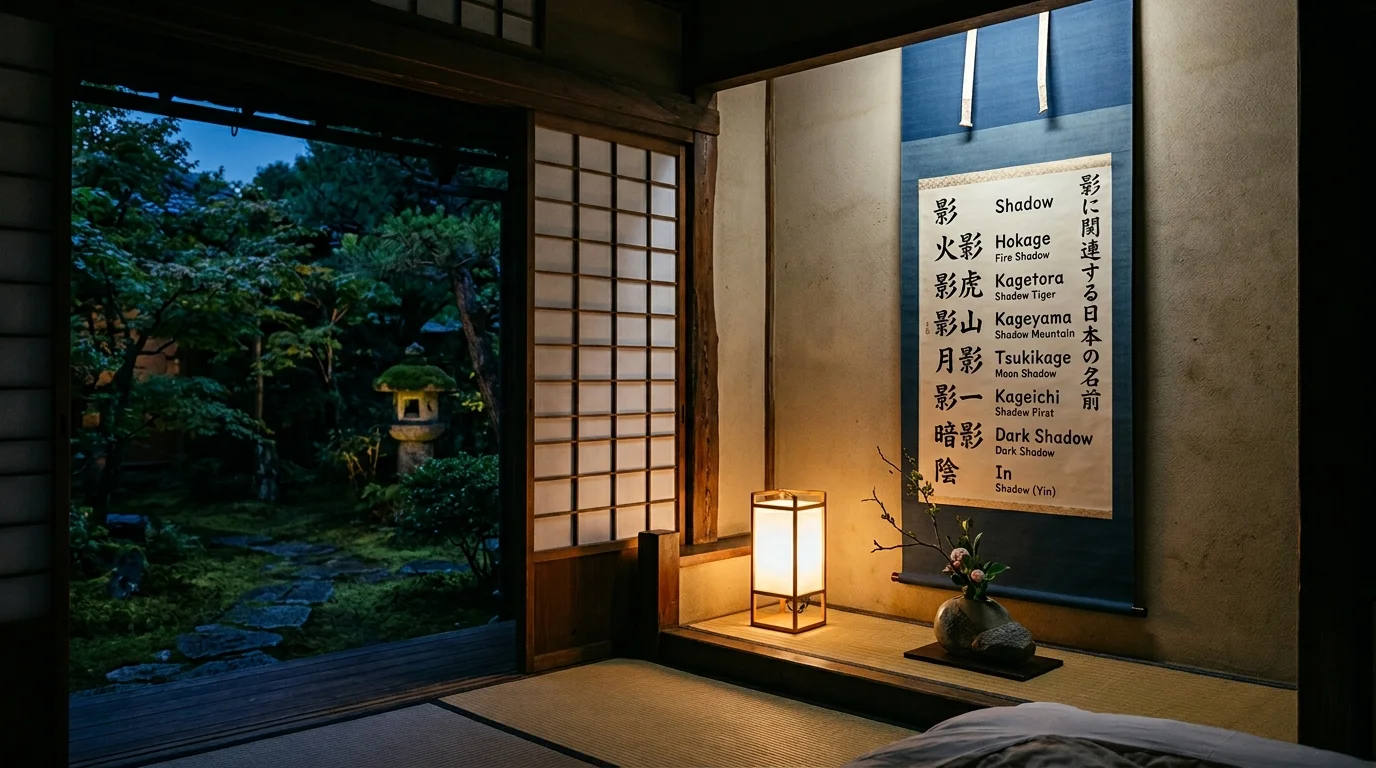
Unisex Japanese Names With Dark or Mysterious Themes
- Aoi
- Haru
- Kage
- Makoto
- Rei
- Ren
- Ritsu
- Sora
- Subaru
- Toki
- Tomo
- Yoru
- Yozora
- Yū
- Yuki
- Zen
- Shion
- Kaoru
- Minato
- Nagi
These names have a calm, mysterious, or atmospheric feel.
Japanese Names Inspired by Night and Darkness
- Anya
- Kuro
- Kurono
- Mayonaka (midnight)
- Tsukiko
- Tsukiyo (moonlit night)
- Yami (darkness)
- Yamiyo (dark night)
- Yoru (night)
- Yozora (night sky)
- Getsu (moon)
- Kaguya
- Luna (modern Japanese usage)
- Rei
- Rin
- Sayo (evening)
- Shizuka
- Sumire
- Towa
- Yūna
These names are closely associated with nighttime and shadowy imagery.
Rare Japanese Shadow-Inspired Names
- Kageaki
- Kagefumi
- Kageharu
- Kagehiro
- Kagekatsu
- Kagemasa
- Kagemori
- Kagenobu
- Kagesada
- Kagetaka
- Kagetoshi
- Kageyasu
- Kuron
- Tsukikage (moon shadow)
- Yamikage (dark shadow)
- Yoruha
- Yorumi
- Yozuki
- Yūgure (twilight)
- Yūrei (ghostly spirit)
These uncommon names are especially suited to historical, fantasy, or fictional settings.
Short Japanese Shadow Names
- Aoi
- Kai
- Kage
- Kuro
- Mei
- Rei
- Ren
- Rin
- Ryo
- Sora
- Yami
- Yoru
- Yui
- Yuki
- Zen
- Nagi
- Towa
- Umi
- Yū
- Saya
Short names are memorable and easy to pronounce while retaining a mysterious feel.
Names That Symbolize Mystery and Shade
- Kage
- Kagerō
- Kaguya
- Kurono
- Shion
- Tsukikage
- Tsukiko
- Tsukiyo
- Yami
- Yamiyo
- Yoru
- Yoruha
- Yorumi
- Yozora
- Yozuki
- Yūgure
- Rei
- Rin
- Nagi
- Towa
These names beautifully reflect the elegance and mystery often associated with shadows in Japanese culture.
How We Choose Japanese Shadow Names
Every name in this guide was selected using one or more of these criteria:
- Authentic Japanese kanji meanings.
- Verified linguistic origins.
- Connections to shadow, darkness, shade, or twilight.
- Cultural and historical relevance.
- Natural pronunciation.
- Timeless appeal.
- Suitability for real names or fictional characters.
Tips for Choosing a Japanese Shadow Name
- Check the exact kanji before using a name.
- Remember that many pronunciations have multiple meanings depending on the kanji.
- Consider symbolic names inspired by night or moonlight.
- Choose a name that is easy to pronounce.
- Research the cultural background of the name.
- Avoid unofficial internet translations.
- Select a name that matches the personality or story you want to convey.
Common Mistakes to Avoid
Assuming Every Dark Name Means Shadow
Many Japanese names are associated with darkness or night but do not literally mean shadow.
Ignoring Kanji Variations
The same pronunciation can have many different kanji, resulting in completely different meanings.
Confusing Fictional Names With Traditional Ones
Some names found in anime, manga, or games are creative inventions rather than established given names.
Choosing a Name Without Checking Authenticity
Always verify the original kanji and meaning through reliable Japanese language sources.
Overlooking Pronunciation
Some rare names may be difficult for non-Japanese speakers to pronounce correctly.
Forgetting Cultural Context
In Japanese culture, shadows often symbolize elegance, mystery, and balance rather than fear or evil.