
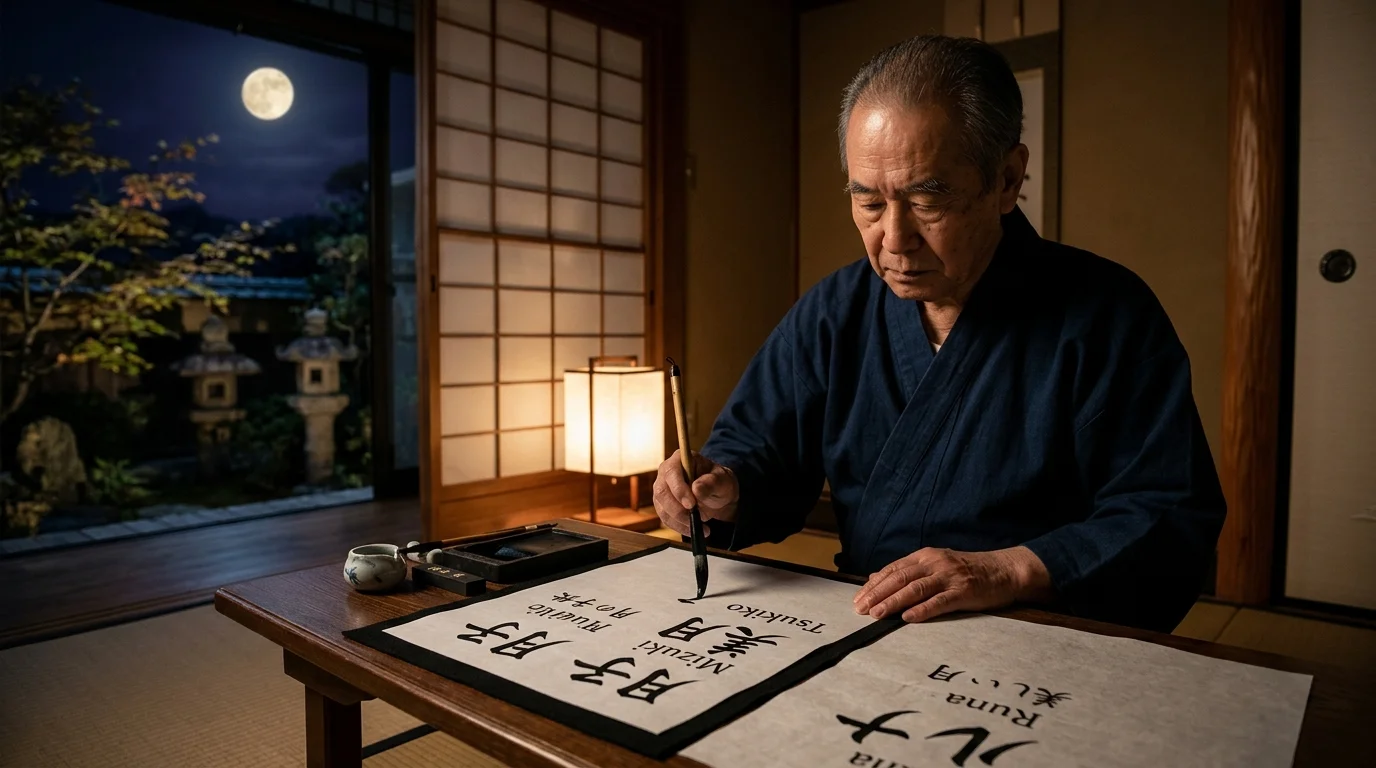
Japanese Names That Mean Moon or Lunar
- Tsuki (月) — moon
- Tsukiko (月子) — moon child
- Tsukika (月華) — moon flower
- Tsukina (月菜) — moon greens/moon beauty
- Tsukino (月乃) — of the moon
- Tsukiyo (月夜) — moonlit night
- Tsukimi (月見) — moon viewing
- Mitsuki (美月) — beautiful moon
- Mizuki (美月 / 瑞月) — beautiful moon or auspicious moon (depending on kanji)
- Getsuka (月華) — moon blossom
These names have direct meanings related to the moon or can be written with moon-related kanji.
Japanese Girl Names Inspired by the Moon
- Akari
- Hikari
- Kaguya
- Luna (modern usage)
- Mizuki
- Runa
- Sayaka
- Shizuki
- Suzuka
- Tsuki
- Tsukika
- Tsukiko
- Tsukimi
- Tsukina
- Tsukino
- Tsukiyo
- Yozuki
- Yuzuki
- Haruna
- Miharu
These names evoke the elegance and gentle beauty of the moon.
Japanese Boy Names Associated With the Moon
- Akitsuki
- Getsu
- Harutsuki
- Kōgetsu
- Mitsuki
- Raito
- Rei
- Sora
- Takatsuki
- Terutsuki
- Tsuki
- Tsukihiko
- Tsukito
- Tsukiya
- Yozora
- Yūto
- Yuzuki
- Ren
- Haruki
- Kaito
These names carry strong lunar, celestial, or nighttime symbolism.
Unisex Japanese Lunar Names
- Akira
- Hikari
- Mitsuki
- Rei
- Ren
- Ritsu
- Sora
- Tsuki
- Tsukiya
- Yozora
- Yuzuki
- Kaoru
- Minato
- Nagi
- Noa
- Rui
- Shion
- Subaru
- Towa
- Yuki
These names work beautifully for any gender while maintaining a celestial feel.
Japanese Names Inspired by Moonlight
- Akatsuki — dawn moon
- Gekkō (月光) — moonlight
- Kaguya
- Kōgetsu
- Mitsuki
- Shizuki
- Tsukika
- Tsukiko
- Tsukimi
- Tsukino
- Tsukiyo
- Yozuki
- Yuzuki
- Harutsuki
- Mizuki
- Reika
- Suzuki
- Terutsuki
- Yuzuru
- Yūna
These names reflect the quiet glow and beauty of moonlight.
Rare Japanese Lunar Names
- Akitsuki
- Getsuka
- Getsumei
- Kōgetsu
- Mikazuki — crescent moon
- Shingetsu — new moon
- Takatsuki
- Terutsuki
- Tsukihime — moon princess
- Tsukikage — moon shadow
- Tsukinowa — moon ring
- Tsukisora — moon sky
- Tsukiteru — shining moon
- Yozuki
- Yūgetsu — evening moon
- Mangetsu — full moon
- Hazuki — eighth lunar month
- Mochizuki — full moon
- Rōgetsu — old moon
- Seigetsu — clear moon
These uncommon names are especially poetic and are often seen in literature, historical names, or creative works.
Short Japanese Lunar Names
- Aya
- Kai
- Mei
- Rei
- Ren
- Runa
- Sora
- Tsuki
- Umi
- Yui
- Yuki
- Rui
- Nao
- Nagi
- Mio
- Hina
- Aoi
- Rin
- Noa
- Riku
Short names are elegant, memorable, and easy to pronounce.
Names That Symbolize the Moon and Night Sky
- Akatsuki
- Gekkō
- Kaguya
- Mikazuki
- Mitsuki
- Mochizuki
- Shingetsu
- Tsuki
- Tsukikage
- Tsukiko
- Tsukimi
- Tsukino
- Tsukiyo
- Yozora
- Yozuki
- Yūgetsu
- Hazuki
- Mizuki
- Terutsuki
- Seigetsu
These names beautifully capture the calm, mystery, and elegance of the lunar world.
How We Choose Japanese Lunar Names
Every name in this guide was selected using one or more of these criteria:
- Authentic Japanese kanji meanings.
- Verified linguistic origins.
- Connections to the moon, moonlight, or the lunar calendar.
- Cultural and historical significance.
- Easy pronunciation.
- Timeless appeal.
- Suitability for real names and fictional characters.
Tips for Choosing a Japanese Lunar Name
- Verify the kanji before choosing a name.
- Remember that the same pronunciation can have different meanings.
- Consider names inspired by moonlight or lunar phases.
- Research cultural significance.
- Choose a name that’s easy to pronounce.
- Avoid relying on unofficial translations.
- Pick a name that reflects the symbolism you love most.
Common Mistakes to Avoid
Assuming Every Moon Name Literally Means Lunar
Many names are inspired by the moon but don’t literally translate to “lunar.”
Ignoring Kanji Variations
Different kanji can completely change a name’s meaning, even if the pronunciation stays the same.
Confusing Modern Coinages With Traditional Names
Some moon-themed names are popular in fiction or modern media but are uncommon as traditional given names.
Skipping Meaning Verification
Always check the exact kanji and meaning through reliable Japanese language resources.
Overlooking Pronunciation
Choose a name that is comfortable to pronounce and write.
Forgetting Cultural Symbolism
In Japanese culture, the moon often symbolizes tranquility, beauty, reflection, and seasonal change.