

Quick Checklist Before Choosing a Japanese Sea Name
- Verify the kanji and its meaning.
- Remember that one pronunciation may have multiple kanji.
- Choose a name that’s easy to pronounce.
- Consider the symbolism behind the kanji.
- Check how the name sounds with your surname.
- Balance uniqueness with everyday usability.
- Pick a timeless name you’ll love for years.
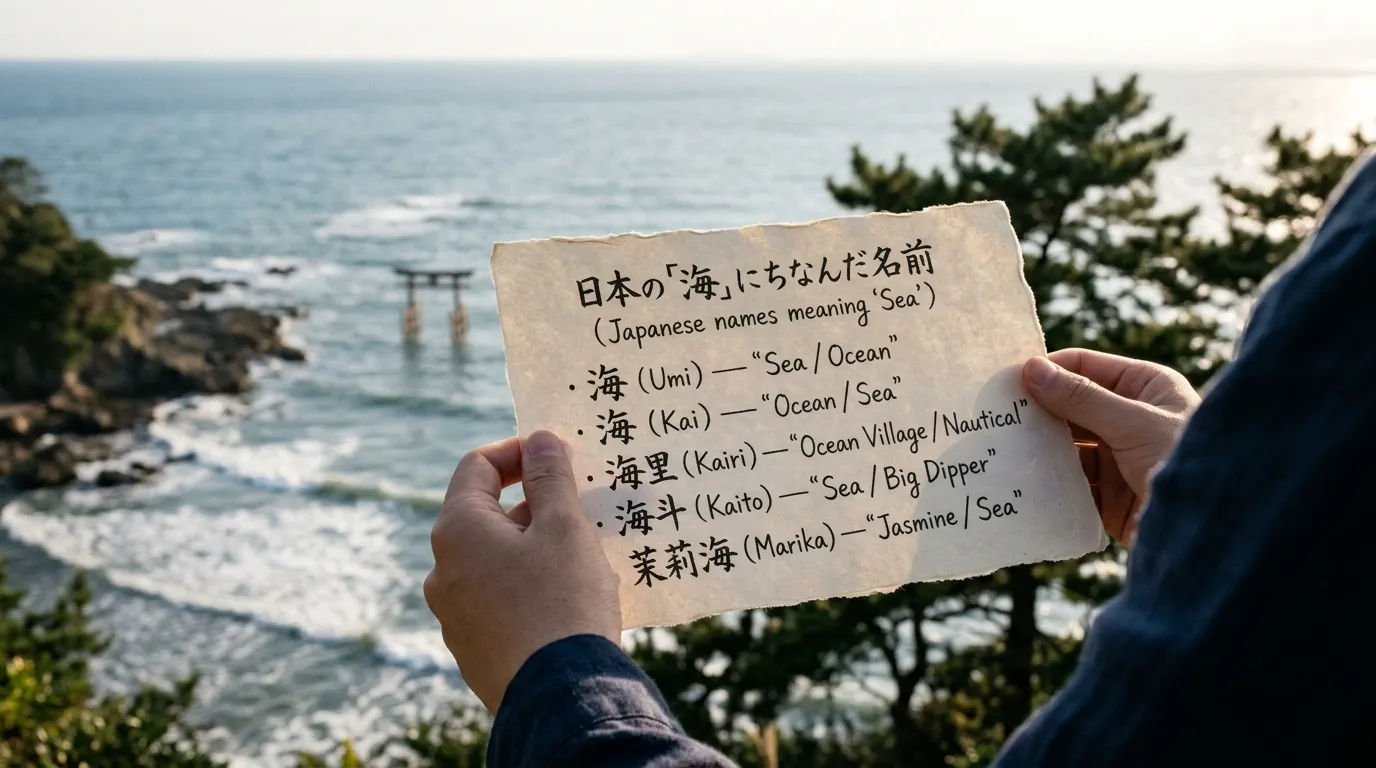
🌊 Japanese Names That Mean Ocean Girl
Umi (海) — Ocean or sea.
Minami (南) — South; a popular Japanese feminine name, though it does not mean ocean.
Marina (まりな) — A Japanese name that can be written in different ways; often associated with the sea through its international usage.
Umika (海花) — Sea and flower, when written with these kanji.
Umiko (海子) — Sea child, when written with these kanji.
Kai (海) — Sea or ocean; used as a given name, especially for boys but also unisex.
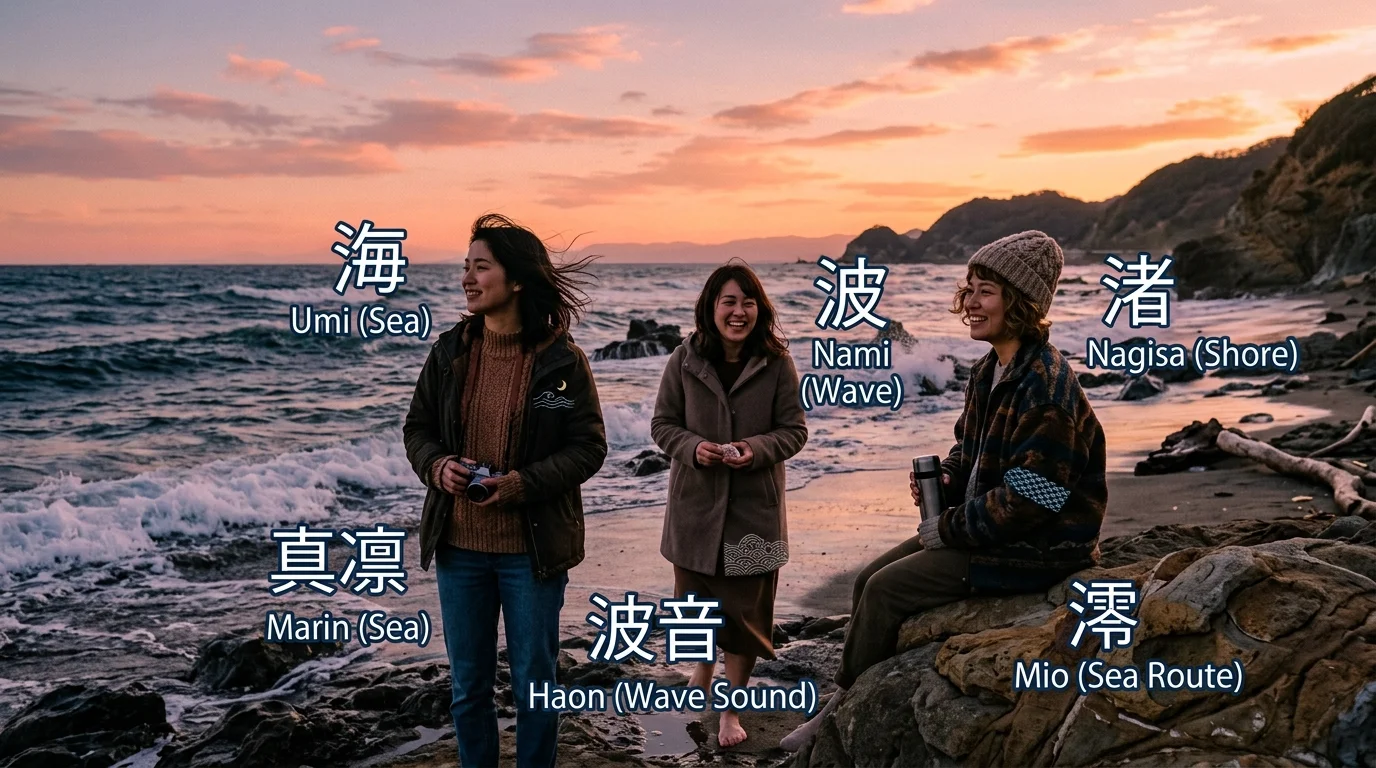
Mio (美海) — Beautiful sea, when written with these kanji.
Miu (美海) — Beautiful sea, with this kanji combination.
Aomi (碧海) — Blue-green sea, when written with these kanji.
Ami (亜海) — Can be written with characters including sea; meaning depends on the chosen kanji.
Nami (波) — Wave.
Namika (波花) — Wave and flower, with these kanji.
Nanami (七海) — Seven seas, when written with these kanji.
Wakana (和海奈) — A possible creative kanji combination involving sea; not a fixed traditional meaning.
Shizuku (雫) — Droplet.
Shion (汐音) — Tide and sound, with these kanji.
Mizuki (瑞希) — Often interpreted through its chosen kanji; some spellings can include water-related characters.
Sango (珊瑚) — Coral.
Kairi (海里) — Sea and distance or village, depending on interpretation.
Chinami (千波) — Thousand waves, when written with these kanji.
🐬 Japanese Names Meaning Ocean Boy
Kai (海) — Sea or ocean.
Kaito (海斗) — Sea with the character to, often used in Japanese names.
Minato (湊) — Harbor or port.
Haruto (陽翔) — Sunlight and soaring, with these kanji; meaning varies by spelling.
Hiro (洋) — Can mean ocean or sea when written with this kanji.
Hiroto (大洋) — Great ocean, with these kanji.
Taiki (大海) — Great sea or ocean, when written with these kanji.
Umito (海斗) — Sea plus to, a possible given-name spelling.
Kairi (海里) — Sea and distance or village, depending on interpretation.
Namiya (波也) — A creative combination using the character for wave.
Isamu (勇) — Courage; not a direct ocean meaning.
Shion (汐音) — Tide and sound, with these kanji.
Shiomi (潮海) — Tide and sea, a possible name construction.
Nagi (凪) — Calm weather or a lull in the wind and waves.
Nagisa (渚) — Shore or water’s edge.
Ryusei (流星) — Shooting star; not an ocean meaning.
Seiji (誠司) — Often associated with sincerity and governance, depending on kanji.
Wataru (航) — Navigate or voyage, with this kanji.
Issei (一星) — One star, with these kanji; not a direct ocean meaning.
Shun (駿) — Excellent or swift, depending on kanji.
💧 Japanese Names Meaning Water Girl
Mizuho (瑞穂) — Auspicious ears of grain; not a direct water meaning.
Mizuki (水希) — Water and hope, when written with these kanji.
Mizue (水恵) — Water and blessing, with these kanji.
Mizuna (水菜) — Water and greens; also the name of a leafy vegetable.
Mizuno (水野) — Water field; more commonly a surname.
Mizuka (水花) — Water and flower, with these kanji.
Mizumi (水美) — Water and beauty, with these kanji.
Mizuha (水葉) — Water and leaf, with these kanji.
Mio (水緒) — Can be written with characters associated with water; meaning depends on kanji.
Miu (水羽) — Water and feather, with these kanji.
Umi (海) — Sea or ocean.
Umika (海花) — Sea and flower.
Umiko (海子) — Sea child.
Nami (波) — Wave.
Nanami (七海) — Seven seas, with these kanji.
Shizuku (雫) — Droplet.
Shizuka (静香) — Quiet and fragrance; not a direct water meaning.
Nagisa (渚) — Shore or water’s edge.
Minamo (水面) — Water’s surface; an evocative word-name idea.
Sui (水) — Water; a rare and minimalist name idea.
🌊 Japanese Name Meaning Ocean Child
Umiko (海子) — Sea child.
Umika (海花) — Sea flower.
Kaito (海斗) — Sea with the character to, often used in names.
Kairi (海里) — Sea and distance or village, depending on interpretation.
Kai (海) — Sea or ocean.
Mio (美海) — Beautiful sea.
Miu (美海) — Beautiful sea.
Nanami (七海) — Seven seas.
Aomi (碧海) — Blue-green sea.
Umi (海) — Sea or ocean.
Taiki (大海) — Great sea.
Hiroto (大洋) — Great ocean, with these kanji.
Umihiko (海彦) — Sea prince or sea boy in a traditional Japanese-style construction.
Umihime (海姫) — Sea princess; a creative name construction.
Shiomi (潮海) — Tide and sea, with these kanji.
Umine (海音) — Sea sound, with these kanji.
Umisa (海咲) — Sea and blossom, with these kanji.
Umiyo (海世) — Sea and world or generation, with these kanji.
Umikae (海風) — Sea breeze, as a creative kanji-based idea.
Kokai (広海) — Vast sea, with these kanji.
Japanese names can have different meanings depending on the kanji selected. Some combinations above are creative possibilities rather than established traditional names.
💧 Japanese Names Meaning Water Boy
Mizuki (水希) — Water and hope, with these kanji.
Mizuto (水斗) — Water plus to, a possible name construction.
Mizuma (水真) — Water and truth, with these kanji.
Mizunari (水成) — Water and becoming, a creative kanji combination.
Kai (海) — Sea or ocean.
Kaito (海斗) — Sea with the character to.
Minato (湊) — Harbor or port.
Nagi (凪) — Calm wind and waves.
Nagisa (渚) — Shore or water’s edge.
Wataru (航) — Navigate or voyage.
Taiki (大海) — Great sea.
Hiroto (大洋) — Great ocean, with these kanji.
Kairi (海里) — Sea and distance or village.
Shion (汐音) — Tide and sound.
Shio (潮) — Tide.
Isana (勇魚) — Traditional word for whale, with these kanji.
Sui (水) — Water; an unusual name idea.
Sei (清) — Pure or clear, depending on context.
Aoto (碧斗) — Blue-green and to, a possible name spelling.
Umihiko (海彦) — Sea boy or sea prince in a traditional-style construction.
🌊 Japanese Names That Mean Water
Mizu (水) — Water.
Sui (水) — Water; also a possible name reading.
Umi (海) — Sea or ocean.
Kai (海) — Sea or ocean.
Nami (波) — Wave.
Shio (潮) — Tide.
汐 (Shio) — Tidal water; another character used for tide.
Nagisa (渚) — Shore or water’s edge.
Nagi (凪) — Calm conditions when wind and waves settle.
Shizuku (雫) — Droplet.
Minamo (水面) — Water’s surface.
Mizuki (水希) — Water and hope, with these kanji.
Mizue (水恵) — Water and blessing, with these kanji.
Mizuka (水花) — Water and flower, with these kanji.
Mizumi (水美) — Water and beauty, with these kanji.
Mizuha (水葉) — Water and leaf, with these kanji.
Mizuto (水斗) — Water plus to, a creative name combination.
Kawase (川瀬) — River rapids; typically a surname.
Kawazu (川津) — River and harbor or crossing; generally a surname.
Amami (雨海) — Rain and sea, a possible creative kanji combination.
🐚 Japanese Last Names That Mean Ocean
Japanese surnames often describe landscapes, geographic features, or places. These surnames contain characters associated with the sea or coastal areas:
Umibe (海辺) — Seaside or shore.
Umino (海野) — Sea field.
Watanabe (渡辺) — Crossing and area; not literally ocean, despite its association with waterways.
Kaizuka (貝塚) — Shell mound.
Hamano (浜野) — Beach field.
Hamaoka (浜岡) — Beach hill.
Hamakawa (浜川) — Beach river.
Hamamoto (浜本) — Beach origin or base.
Matsunami (松波) — Pine and wave.
Shiozaki (潮崎) — Tide cape or promontory.
Shiomi (潮見) — Tide viewing.
Shiosaki (潮崎) — Tide cape.
Kawasaki (川崎) — River cape or peninsula.
Okawa (大川) — Large river.
Oikawa (及川) — A Japanese surname with several possible origins; often written with the river character.
Arahama (荒浜) — Rough or wild beach.
Namikawa (波川) — Wave river, with these characters.
Kaigan (海岸) — Coast or seashore; a word that may inspire a surname-style name.
Kaihama (海浜) — Seashore or coastal beach.
Shirahama (白浜) — White beach.
🌊 Japanese Names Meaning Wave
Nami (波) — Wave.
Namiha (波葉) — Wave and leaf, with these kanji.
Namika (波花) — Wave and flower.
Nanami (七海) — Seven seas, rather than “wave.”
Namiya (波也) — A possible name construction using the wave character.
Namikai (波海) — Wave and sea, a creative combination.
Namiho (波穂) — Wave and ear of grain, with these kanji.
Namiha (波羽) — Wave and feather, with these kanji.
Namioto (波音) — Sound of waves.
Namiaki (波明) — Wave and brightness, a creative combination.
Kaito (海斗) — Sea-themed name, not literally wave.
Kairi (海里) — Sea-themed name.
Shion (汐音) — Tide and sound.
Shio (潮) — Tide.
Nagisa (渚) — Shore or water’s edge.
Nagi (凪) — Calm conditions when wind and waves settle.
Umika (海花) — Sea flower.
Umine (海音) — Sound of the sea.
Minami (南) — South; not a wave meaning.
Aomi (碧海) — Blue-green sea.
Japanese Girl Names Inspired by the Sea
These feminine names are connected to the sea, ocean, waves, or marine beauty.
- Umi (海)
- Umika
- Minami
- Nami (波)
- Nanami
- Minamo
- Mio
- Shiori
- Nagisa
- Shiho
- Mizuki
- Mizukiha
- Umiho
- Kaika
- Marin
- Marisa
- Aomi
- Umine
- Harumi
- Sayumi
These names capture the peaceful, graceful, and ever-changing beauty of Japan’s coastlines.
Japanese Boy Names Inspired by the Sea
Strong and meaningful, these names reflect the ocean’s power and serenity.
- Kai (海)
- Kaito
- Kaitoha
- Kairi
- Kaisei
- Minato
- Isana
- Umito
- Haruto
- Souta
- Nagi
- Riku
- Ren
- Seiya
- Taiga
- Hayate
- Kaiga
- Mizuto
- Kousei
- Takumi
Many of these names use kanji related to the sea, ocean, ports, or coastal landscapes while conveying strength and calmness.
Unisex Japanese Names Connected to the Ocean
These names work beautifully for any gender.
- Umi
- Kai
- Nami
- Nagi
- Aoi
- Minato
- Mizuki
- Harumi
- Kaoru
- Ruka
- Noa
- Mio
- Sora
- Hinata
- Izumi
- Yuu
- Akira
- Rei
- Makoto
- Itsuki
Unisex Japanese names are elegant, versatile, and often inspired by the natural world, making them timeless choices.
Japanese Names Meaning Wave
Wave-inspired names symbolize resilience, movement, and the rhythm of life.
- Nami
- Nanami
- Namika
- Namiko
- Natsunami
- Hamanami
- Uminami
- Minanami
- Namise
- Namiri
- Kaonami
- Shionami
- Mizunami
- Harunami
- Suzunami
- Ayanami
- Fuunami
- Seinanami
- Namino
- Namiha
Wave names evoke elegance and strength, reflecting the ocean’s gentle yet powerful nature.
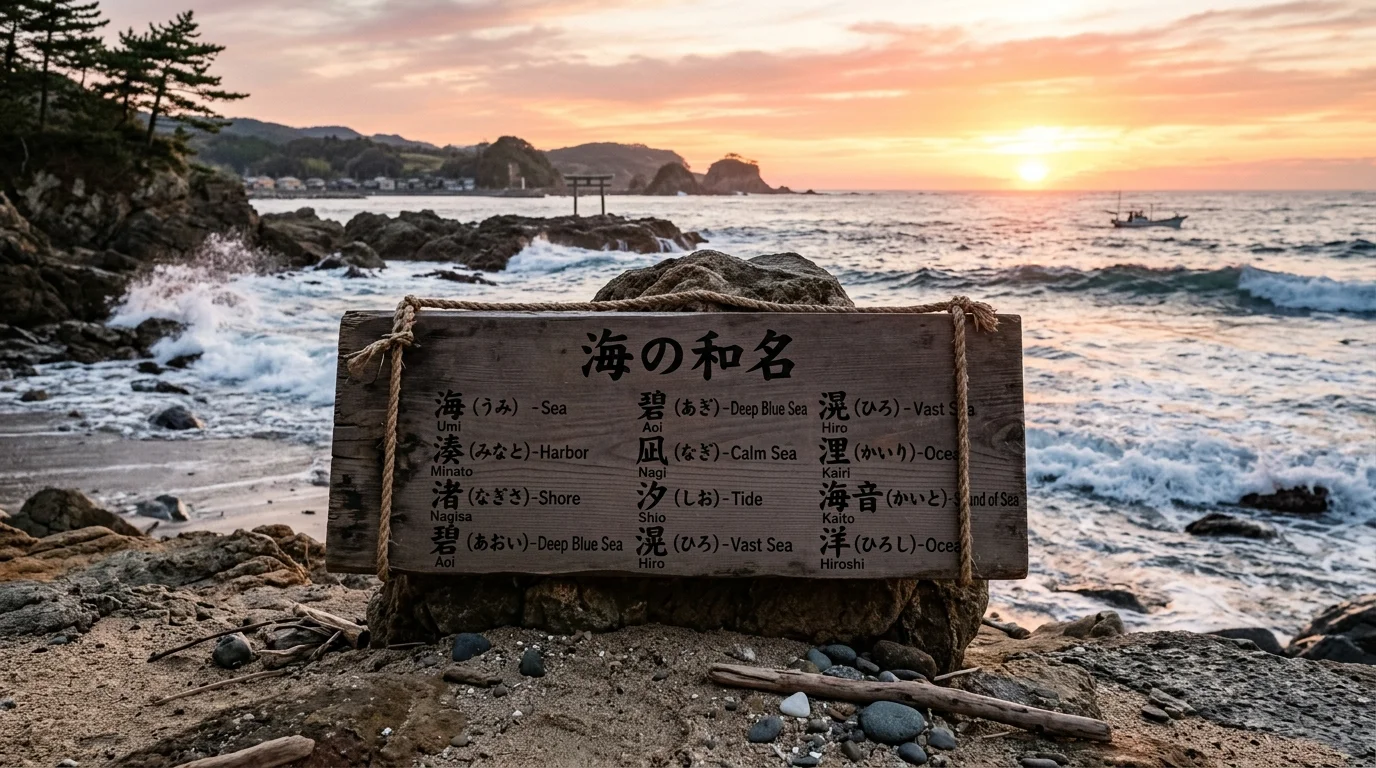
Japanese Names Meaning Ocean
These names are inspired by the vastness, beauty, and strength of the ocean. While some use the kanji 海 (umi, “sea”), others evoke the open waters through their meaning or traditional usage.
- Kai (海)
- Kaito (海翔)
- Kaisei (海晴)
- Kairi (海里)
- Umito (海斗)
- Umi (海)
- Umika (海花)
- Umine (海音)
- Kaiga (海雅)
- Kaishu (海舟)
- Kaima (海真)
- Kaiki (海輝)
- Kaimu (海夢)
- Umiharu (海陽)
- Umikao (海香)
- Kaitoha (海翔太)
- Umina (海菜)
- Kaion (海音)
- Kaiseiro
- Umino (海野)
Ocean-inspired names symbolize freedom, exploration, and the endless possibilities that lie beyond the horizon.
Japanese Names Inspired by Beaches, Shores, and the Coast
Japan’s beautiful coastline has inspired many names associated with peaceful seaside scenery.
- Nagisa (渚) – Shore, beach
- Minato (港) – Harbor
- Iso (磯) – Rocky shore
- Hamana
- Hama (浜) – Beach
- Hamako
- Hamaji
- Hamari
- Hamato
- Hamane
- Minami
- Shiho
- Shiosaki
- Shiomi
- Shion
- Isobe
- Umisato
- Umisaki
- Kaigan
- Nagihama
These coastal names reflect tranquility, natural beauty, and a close connection to the sea.
Rare Japanese Names Inspired by the Sea
If you’re looking for something distinctive, these uncommon names offer unique ocean-inspired meanings.
- Umine
- Umiho
- Kaion
- Kaima
- Umika
- Kaimu
- Umina
- Mizunami
- Namise
- Harunami
- Kaiga
- Kaiki
- Umiharu
- Hamari
- Shionami
- Suzunami
- Kaiseiro
- Umisora
- Kaiseiha
- Namiharu
Rare names stand out while preserving the elegant simplicity often found in Japanese naming traditions.
How We Choose Japanese Sea Names
Every name in this guide was selected through careful research to provide authentic and meaningful recommendations.
Our process includes:
- Researching traditional Japanese kanji and their meanings.
- Including names associated with sea (海), wave (波), shore (渚), harbor (港), and coastal imagery.
- Distinguishing between literal meanings and symbolic ocean-inspired names.
- Balancing traditional, modern, rare, and unisex options.
- Avoiding duplicate names throughout the guide.
- Prioritizing names that are natural and commonly recognized in Japanese naming traditions.
- Clearly noting that many Japanese names can have different meanings depending on the kanji used.
Because Japanese names often have multiple possible kanji spellings, the exact meaning should always be confirmed based on the chosen characters.
Tips for Choosing a Japanese Sea Name
Choosing a Japanese-inspired name requires more than simply liking the pronunciation.
- Verify the exact kanji and its meaning.
- Learn the cultural background of the name.
- Consider pronunciation outside Japan.
- Choose kanji with positive symbolism.
- Think about how the name sounds with your surname.
- Keep the spelling simple if used internationally.
- Balance uniqueness with authenticity.
- Select a name that will remain meaningful throughout life.
Common Mistakes to Avoid
Assuming Every “Kai” Name Means Sea
While Kai (海) can mean sea, the pronunciation Kai can also be written with many different kanji carrying entirely different meanings.
Ignoring the Kanji
Japanese names are defined by their written characters as much as their pronunciation. The same spoken name may have several meanings.
Inventing Unnatural Combinations
Combining random kanji doesn’t always produce a name that would naturally be used in Japan.
Focusing Only on the Sound
A beautiful pronunciation should also have a meaningful and appropriate written form.
Forgetting Cultural Context
Some names are traditional, while others are modern or uncommon. Understanding their background helps you choose wisely.
Overcomplicating Pronunciation
If the name will be used internationally, consider whether it’s easy for others to pronounce correctly.
Assuming Anime Names Are Traditional
Many anime characters have unique or fictional names that aren’t commonly used for real children.